


 Deutsch
 English
 Español
 Français
 Nederlands
 Português


 Share
Share




The Strategic Calculus of Semiconductor Decoupling
The accelerating semiconductor decoupling between the United States and China represents one of the most significant transformations in global technology supply chains since the dawn of the digital age. Recent U.S. policy moves including the termination of technology waivers for major chipmakers in China, new 35% tariffs on Chinese electronics, and China's rare earth export controls have fundamentally reshaped the strategic landscape of technological competition. This bifurcation creates unprecedented investment opportunities in semiconductor equipment suppliers, rare earth producers, and nearshoring infrastructure while examining the broader geopolitical and economic consequences of technology supply chain fragmentation.
What is Semiconductor Decoupling?
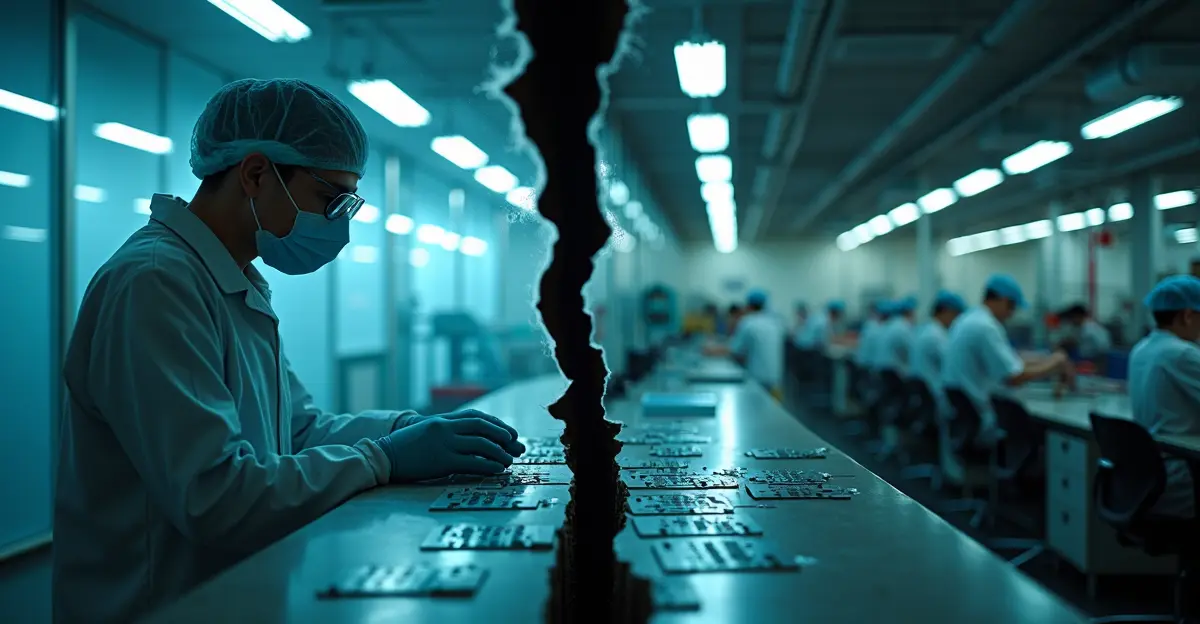
Semiconductor decoupling refers to the systematic separation of U.S. and Chinese technology ecosystems, particularly in the critical semiconductor industry that powers everything from smartphones to military systems. This process involves export controls, investment restrictions, and strategic policies designed to limit technological interdependence between the world's two largest economies. The recent termination of validated end user (VEU) export privileges for TSMC, SK Hynix, and Samsung's Chinese operations, effective December 31, 2025, represents a significant acceleration of this trend. According to CNBC reporting, this policy change removes fast-track export privileges that allowed these companies to ship U.S.-origin chipmaking equipment to their Chinese facilities without licenses.
Recent Policy Escalations
Termination of Technology Waivers
The U.S. Commerce Department's decision to revoke VEU privileges for TSMC, SK Hynix, and Samsung marks a critical turning point. While the U.S. intends to grant licenses for existing operations, it will not permit capacity expansion or technology upgrades in China. This move closes what officials call a "Biden-era loophole" and reflects Washington's broader strategy to tighten control over semiconductor technology exports to China. The financial impact on TSMC is expected to be minor since its Nanjing facility contributes less than 3% of total revenue, but the symbolic significance is substantial.
New Tariff Regime
Complementing these export controls are new tariff measures targeting Chinese electronics. The U.S.-China tariff landscape in 2025-2026 remains complex with multiple overlapping measures, including Section 301 tariffs (7.5% or higher) and Section 232 tariffs (25-50% on specific products). According to China Briefing analysis, the effective tariff rate on many Chinese goods remains around 30%, still the highest for any country. These measures create significant cost pressures for electronics manufacturers and accelerate the reshoring of semiconductor production to allied nations.
China's Rare Earth Response
China has responded with strategic export controls on rare earth elements, which are essential for semiconductor manufacturing, defense systems, and clean energy technologies. According to Discovery Alert research, China's post-2025 rare earth export controls have fundamentally transformed critical materials from market commodities into instruments of geopolitical strategy. This creates unprecedented market fragmentation with dual-tier pricing systems where identical materials trade at dramatically different prices depending on regulatory classification and destination.
Investment Opportunities in a Bifurcated Market
Semiconductor Equipment Suppliers
The semiconductor equipment market presents significant investment opportunities as decoupling accelerates. The market is projected to grow from USD 114.82 billion in 2026 to USD 162.70 billion by 2031, representing a 7.22% CAGR according to Mordor Intelligence. Key players include:
- ASML: Generated $27.6 billion in revenue and $8.5 billion net income in 2023, with a 100% monopoly on EUV lithography machines essential for advanced chips
- Applied Materials: Reported $26.5 billion revenue and $6.6 billion net income, holding about 30% market share in deposition equipment
- Lam Research: Earned $17.4 billion revenue and $4.3 billion net income, controlling 45% of the etch equipment market
ASML's semiconductor equipment business is experiencing unprecedented growth driven by AI chip demand, with a staggering €36 billion order backlog as of Q3 2025 according to AInvest analysis.
Rare Earth Producers
China's rare earth export controls have created opportunities for alternative producers. China controls 90% of global rare earth element (REE) separation and processing, giving Beijing unique coercive power in global geopolitics. The U.S. and EU have responded with strategic autonomy initiatives including domestic production targets, recycling requirements, and technology development programs to reduce dependence on controlled materials. This creates investment potential in:
- Domestic rare earth mining operations in allied nations
- Recycling technologies for critical minerals
- Alternative material development research
Nearshoring Infrastructure
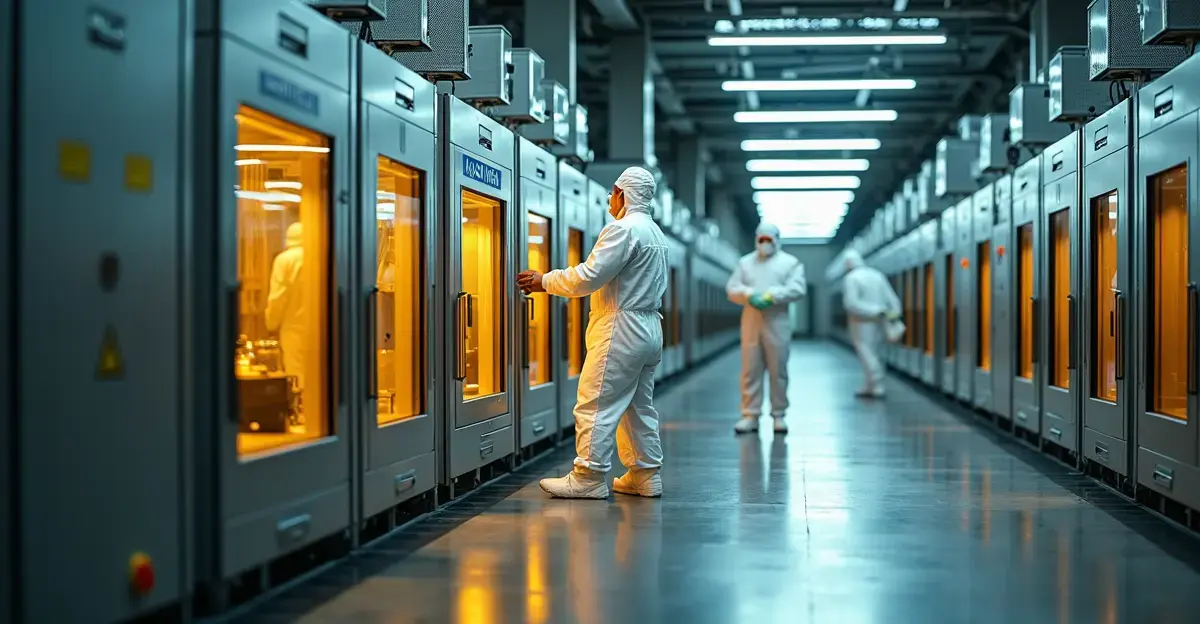
The decoupling trend is accelerating investment in semiconductor manufacturing facilities outside China. Taiwan's semiconductor sector, which accounted for US$115 billion or around 20 percent of the global semiconductor industry, faces increasing geopolitical pressure. This has led to significant investments in U.S.-based fabs, including a $65 billion project in Arizona supported by the CHIPS and Science Act. The global chip shortage of recent years has further highlighted the strategic importance of geographically diversified semiconductor production.
Economic and Geopolitical Consequences
A November 2025 ITIF report warns that U.S. semiconductor export controls on China could severely harm American chipmakers and innovation. The analysis estimates that in a full decoupling scenario, U.S. firms could lose approximately $77 billion in semiconductor industry sales in the first year, with South Korean, EU, Taiwanese, Japanese, and Chinese firms capturing those lost revenues. This revenue loss would reduce U.S. semiconductor R&D investments by about 24% ($14 billion), undermining long-term competitiveness. The report projects over 80,000 fewer U.S. semiconductor industry jobs and nearly 500,000 fewer downstream jobs.
Meanwhile, China is making remarkable progress toward self-sufficiency, achieving 28% domestic semiconductor production in Q4 2025 (up from 16% in 2024) and successfully producing 7nm chips without restricted EUV equipment. The global semiconductor market is increasingly dividing into two incompatible ecosystems, creating opportunities for non-US, non-Chinese firms while forcing companies to choose between serving China or Western markets.
Expert Perspectives on Supply Chain Fragmentation
Industry analysts warn that the decoupling represents a fundamental reshaping of global supply chains and technological competition with significant implications for industries worldwide. "The U.S.-China decoupling is creating two parallel supply chains: a U.S.-aligned diversification network and a China-centered bloc," notes Dr. Umair Hafeez Ghori in his study of rare earth export controls. "Mineral security has become synonymous with national security, with export controls emerging as the primary instruments of influence in global power competition."
The technology cold war between the U.S. and China is forcing companies worldwide to make difficult strategic choices about their supply chains, technology partnerships, and market access. This fragmentation creates both risks and opportunities, with the potential to reshape global economic relationships for decades to come.
Frequently Asked Questions
What is semiconductor decoupling?
Semiconductor decoupling refers to the systematic separation of U.S. and Chinese technology ecosystems through export controls, investment restrictions, and strategic policies designed to limit technological interdependence in the critical semiconductor industry.
How do the new U.S. tariffs affect Chinese electronics?
The effective tariff rate on many Chinese electronics remains around 30% in 2025-2026, combining Section 301 tariffs (7.5% or higher) and Section 232 tariffs (25-50% on specific products), creating significant cost pressures for manufacturers.
What are the investment opportunities in semiconductor decoupling?
Key opportunities include semiconductor equipment suppliers (ASML, Applied Materials, Lam Research), rare earth producers outside China, and nearshoring infrastructure for semiconductor manufacturing in allied nations.
How is China responding to semiconductor decoupling?
China is implementing rare earth export controls, accelerating domestic semiconductor production (reaching 28% self-sufficiency in Q4 2025), and developing alternative technologies to reduce dependence on Western equipment.
What are the economic consequences of full decoupling?
According to ITIF analysis, full decoupling could cost U.S. firms $77 billion in semiconductor sales, reduce R&D investments by $14 billion (24%), and eliminate over 80,000 direct semiconductor industry jobs plus nearly 500,000 downstream jobs.
Future Outlook and Strategic Implications
The semiconductor decoupling between the U.S. and China represents a fundamental shift in global technology competition that will shape economic and geopolitical relationships for decades. As both nations pursue strategic autonomy in critical technologies, companies worldwide must navigate increasingly complex regulatory environments, dual supply chains, and competing technological standards. The AI arms race further intensifies these dynamics, with semiconductor technology serving as the foundational infrastructure for artificial intelligence development.
Looking forward, the success of decoupling strategies will depend on several factors: the effectiveness of alternative supply chain development, technological innovation in both ecosystems, and the ability of allied nations to coordinate their approaches to semiconductor security. What remains clear is that the era of globally integrated semiconductor supply chains is giving way to a new paradigm of strategic competition and technological sovereignty.
Sources
CNBC: U.S. revokes export privileges for TSMC, SK Hynix, Samsung in China (2025)
ITIF: Decoupling Risks: Semiconductor Export Controls Harm U.S. Chipmakers and Innovation (2025)
Discovery Alert: Critical Materials Governance in Global Supply Chains (2026)
China Briefing: U.S.-China Tariff Rates 2025-2026
Mordor Intelligence: Semiconductor Equipment Market Analysis (2026)
AInvest: ASML Surging Order Backlog in AI Semiconductor Boom (2025)
Wikipedia: Semiconductor Industry in Taiwan



Follow Discussion